web analytics
Categories
Birding Costa Rica

634 Species, Six Months to Go

We are half way through the year and that means six months to go before making a final tally of bird species identified during 2016. Time is relative, calendars are subjective inventions, and some people who have binoculars banter back and forth about keeping lists. So what? At the end of the day, we should all be reminded that life is usually shorter than we would prefer, it is unpredictable, and we should therefore have as much fun as we can (in addition to learning and doing good, etc, but those aspects are for another blog). Part of that fun can be keeping a year list because it gives us something to work towards, something to look forward to, and, most of all, encourages you to get out there and look for more birds, do more birding.

If you go to the mall, play too many games of bingo, or watch some useless reality show instead of going outside, you ain’t never gonna see a  Black and Yellow Silky-Flycatcher. Actually, if you don’t visit Costa Rica or Panama, you won’t see one either.

I  haven’t spent so much time in the field lately and it’s not because I was doing any of the above. I guess it’s because it rains a fair deal now, it’s always hard for me to get out mid-week during the early good birding hours, and the low season translates to less guiding. It’s also bird breeding season and just as with birders up north, the lack of migrants sometimes makes us feel lazy about looking for birds. This is clearly a silly concept because rarities can still show up in June and there is always more to learn about towhees, brush-finches, toucans, or other birds no matter which ones we are looking at.

Always nice to look at one of these…

I might also be acting a bit lazy about birding because I already have a healthy year list. Each year, I hope to at least see or hear 600 bird species in Costa Rica, and thanks to some intense guiding during March and April, surpassed that mark a while ago. I’m now at 634 species, my latest addition being a surprise Slate-colored Seedeater that was singing at a bamboo seeding event near Cinchona this very morning. From now on, several additions are likely to happen like that seedeater, unexpected but based on statistics, nevertheless probable. What I am trying to say is that the more time we spend in the field with focused intent on birds, the more species we see, including the rare ones. Speaking of “rare ones”, there are a lot in Costa Rica. This is typical for neotropical birding, and even more so when most accessible forests are quite fragmented.

However, I still have a bunch of other candidate species for the year list that aren’t so rare. They just live in places and habitats where I have spent little time in 2016. One of those areas is San Vito and down there by the border with Panama. If I can make it down that way, I will have a fair chance at adding Crested Oropendola, Bran-colored Flycatcher, and several other species that lack the annual tick mark. Since a few would also be new for my country list, I should really make an effort to go and see them. I hope I can make that happen so I can finally check off Lance-tailed Manakin, Ruddy Foliage-gleaner, and Mouse-colored Tyrannulet for my Costa Rica list. Not to mention, there’s a lot of other cool birds down that way too.

Other gaps come in the form of seabirds but for a seasick prone person like myself, that’s always the case. With some judicious ferry trips, I should add some of those and will always have a chance at picking up something truly rare from the top deck of the boat. Hitting 650 or even 700 will also be more likely if I can connect with several migrants. Hopefully, if we go for another Big Day in fall, scouting will turn up some of those needed species along with various rarities. Whether I hit the 700 mark or not by 2017, trying for it will be all good because that will make me do a lot of birding anyways and that’s the best part of it. Are you keeping track of year birds? Whether in Costa Rica or elsewhere, tell everyone about it in the comments.

Categories
Birding Costa Rica birds to watch for in Costa Rica

A Weekend of High and Dry Birding in Costa Rica

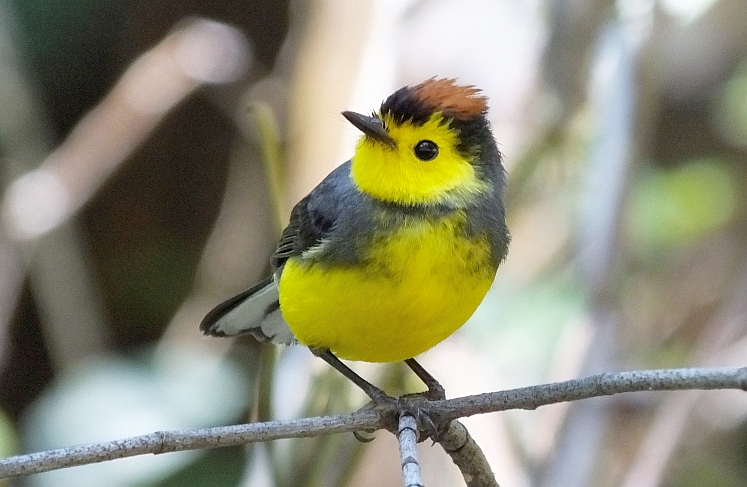
In Costa Rica, when referring to “high birding”, that doesn’t have anything to do with looking for birds under the influence of Cannabis (although that might give you some imaginary lifers). It just means heading uphill to the places where the vegetation rings with the songs of Collared Redstarts and jostles with the foraging of Sooty-capped Chlorospinguses. I know, please, say Chloro what? I mean can a bird please have a name that doesn’t sound like an obscure part of the anatomy? Not when it’s a former pseudo-tanager/finch thing. Well, I guess that’s what Chlorospingus means and it’s always better to build the personal lexicon than subtract from it so happy Chlorospingus to everybody.

The Sooty-capped Chlorospingus could also be known as the “Lighting-stripe headed Highland Chunkster”.

Last week, a morning of guiding on Irazu got me into some fine high birding and not just to the realm of the S-C Chlorospingus. It also brought us up above the treeline and into junco land. The junco in question here is an angry-looking bird with fierce yellow eyes, pinkish bill, and a home range that sits atop a few mountains. It shares that range with a handful of other bird species, one of which is the Timberline Wren. On our day of birding, we got both just outside the entrance to the national park. Happily, the Volcano Juncos just about followed us around as a pair of adults fed their striped, sparrow-looking youngsters. Really good to see that they had a successful nesting season (so far, although the young sure looked healthy as they hopped around and ate berries and bugs).

Young Volcano Junco.


A fierce adult Volcano Junco at Irazu.

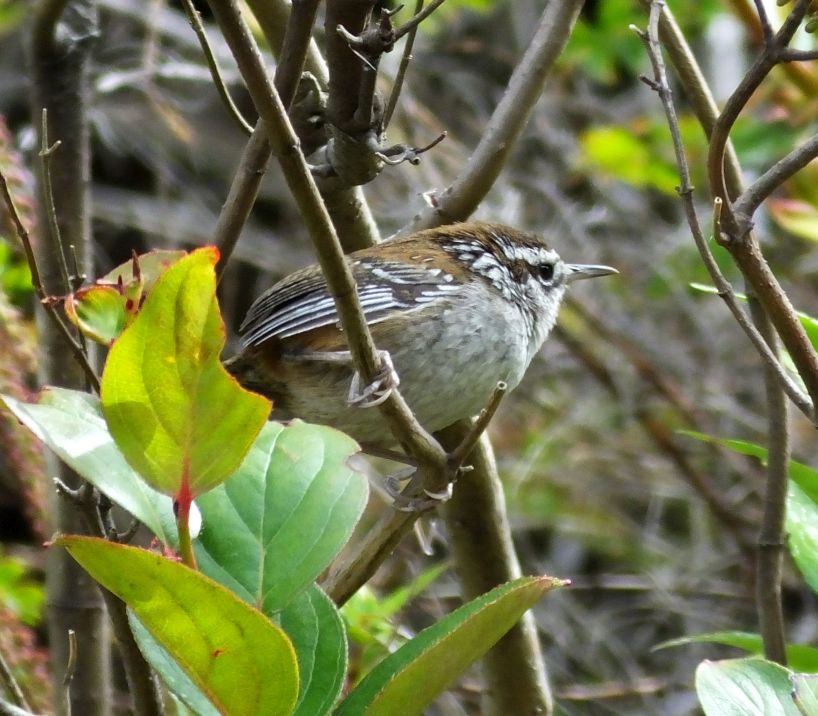
I was very pleased that we saw them so well because they can be a pain to find when they refuse to leave the dense haunts of paramo vegetation. Speaking of skulking, that’s what the wren chose to do until, at the last moment, a pair sang close enough for us to see them.

Timberline Wren from another day at Irazu.

We had a pretty good morning overall seeing most possible species including flight (but good) views of male and female Resplendent Quetzals, Fiery-throated Hummingbirds, brief looks at Buffy-crowned Wood-Partridge, Flame-throated Warbler, both silky-flycatchers, and so on.

The Flame-throated Warbler lives up to its evocative name. Flame on feathered dude!

The following morning, it was down to dry guiding and birding for the annual meeting of the Birding Club of Costa Rica near Universidad de la Paz at the Finca Caballo Loco. It was nice to see several people I hadn’t seen in a while, especially Henry, a guy who has been passionate about living in harmony with other living things for many years. The birding turned up various expected species in edge habitats and dry topical forest (nice and green at this time of year). Olive Sparrows and Yellow-green Vireos were singing nearly non-stop, and we had nice looks at several bird species including Ferruginous Pygmy-Owl, Keel-billed Toucans, Gray-crowned Yellowthroat, and Yellow-throated Euphonia.

Fiery-billed Aracari also showed very well.

The weekend made for an interesting mix of species typical of birding in Costa Rica in radically different habitats from one day to the next. I did not go out birding on Sunday but could have easily visited Caribbean slope foothill forests or cloud forests for yet another suite of species not seen on Friday or Saturday. The close combination of different ecosystems always makes for a bio-exciting experience and I suspect that few other places on the planet can offer such radically different birding is such a small area. Hope to see you here!

Categories
Birding Costa Rica Costa Rica bird finding guide Costa Rica birding app preparing for your trip Where to see birds in Costa Rica

Why It’s Important to Study Before a Birding Trip to Costa Rica

Study for birding? What? Didn’t we spend enough of our lives studying during high school and university? To pass our tests for a driver’s license? To compete on Jeopardy? Whether you dislike studying or not, it’s the right thing to do before a birding trip to Costa Rica. Make that any birding trip anywhere. This is why it’s especially important to study before testing your bino skills in Costa Rica:

Unfamiliar birds, unfamiliar bird families: Just like Dorothy, you can kiss Kansas goodbye! Not only are the birds unfamiliar, but so are many of the families. Have you ever seen a Blue-gray tanager at the home patch? That common bird is pretty easy but what about a Dull-mantled Antbird or dozens of other skulking species with poetic names? But at least House Wren is on the list right? Well, yes, it is and it pretty much looks like the ones back home but it’s not going to sound like them. But what about folks who have already birded in Costa Rica or other areas in the Neotropical region? See the next point to answer that question.

Ocellated Antbird

Almost too many birds: Almost because there can never be enough. But seriously, though, there are so many possible birds, it’s always worth studying before the trip no matter how many times you have birded Costa Rica. Study to brush up on field marks of foliage-gleaners, to know which species are possible in given areas (get the targets set), and to always be ready- see the next point.

Black-bellied Hummingbird is one of 50 plus hummingbird species that live in Costa Rica.

You only get one look: Maybe, maybe not, but serious biodiversity comes at a price- almost everything is is rare by nature. Not so much the second growth and edge species (most of which can also be seen from Mexico south to the bird continent), but most of the forest-based birds and raptors. Combine small populations with major skulking and hiding skills and we have a recipe for challenging birding that can afford very few sightings. The up-side is that you can go birding at the same quality forest site day after day and see more species every time. Since we might only get a few looks at various species during a one or two week trip, we need to be ready to focus on the field marks. A good birding guide will be a major help but it still pays to know what to look for.

What’s an antbird?: Back to unfamiliar families. Try and become more familiar with things like puffbirds, forest-falcons, motmots, and antbirds. These things don’t occur at home. They don’t act like most birds at home. This makes you want to see them more of course, so study them in the field guide and read about their behavior (this blog is a good place to start).

Keel-billed Motmot

Check out the vocalizations: Yeah, it’s a lot to study and not everyone’ s cup of tea but knowing at least a few of those sounds before the trip is going to be a huge help. To give an idea of how important knowledge of bird vocalizations is when birding in the Neotropics, when we do point counts, we hardly use our binoculars at all. The majority of birds at dawn and in the forest you can’t really seem at that hour anyways. But, you can hear them and you can hear a lot, like dozens, even one hundred species in some spots. With a list that tops 900 species, no one can be expected to know every single chip and song, but even knowing what certain bird families sound like can really help.

Study common birds, study the birds you want to see the most: If you don’t have the time and memory for hundreds of species, stick to the common ones along with your favorite targets. The more you study, the more you will see (even with a guide), and you will be seeing birds that are already sort of know instead of random, totally unfamiliar species.

Some stuff to study:

Field guides: First and foremost, this the first tool to get. Although the best way to learn any new bird or family is to see it in person, studying before a trip will help. Some people prefer illustrations and others prefer photos. Both will help but an advantage of photos is that they can capture subtleties and other aspects of birds that can be hard to show with an illustration. They also tend to show how the birds look in the field. We won’t know anything about the birds in Costa Rica if we don’t have a study guide and although there are a few others, these are the best ones to get:

-The Birds of Costa Rica a Field Guide by Carrigues and Dean: Compact, complete, good illustrations and maps, the book to get.

–Costa Rica Birds Field Guide app by BirdingFieldGuides: On a mobile device, photos for 850 plus species, vocalizations for more than 600 species, and information and maps for all species on the list (over 900). Also, ability to take and email notes in eBird format, variety of search functions, similar species function,no Internet needed for app to work.

Reference books: The best book to get is Birds of Costa Rica by Stiles and Skutch. It might be a bit out of date, kind of big for the field, and the illustrations are ok, but it has the best set of information about the ecology of birds in Costa Rica. This is an excellent book to study to learn about the behavior of the Costa Rican avifauna. Other good choices include:

– Any other books by Alexander Skutch.

– Birds of Tropical America by Steven Hilty is an excellent treatise on the behavior and ecology of neotropical birds.A fun, informative read before and after the trip.

-The Wildlife of Costa Rica: A Field Guide by Reid, Leenders, and Zook also works as a field guide and has information about other animals in addition to birds.

– Travellers Wildlife Guides Costa Rica by Les Beletsky is another field guide with lots of cool information about birds and other wildlife.

eBird: What modern day birder doesn’t use eBird as a study tool? If you don’t check it out but be aware that it can be a serious eater of time. Most of all, it’s good for knowing where birds have been seen. Pay it back by sending in your own lists.

Bird finding guides: There are a few old ones that still have some valid information but as with any country, bird finding information changes over time. the most recent bird finding guides are:

– A Bird Finding Guide to Costa Rica by Barrett Lawson has a lot of good bird finding information for various places, especially well known sites. Available in print.

– How to See, Find, and Identify Birds in Costa Rica by Pat O’Donnell (yep, that’s me) is like two or three books in one with the most up to date bird finding information for most of the country, including several little known sites, as well as information about behavior, ecology, and identification of Costa Rican birds. Available in e-book format and for Kindle devices.

Categories
Birding Costa Rica preparing for your trip Where to see birds in Costa Rica

Tips for Green Season Birding in Costa Rica

Coinciding with the start of the rains, the green season has arrived, quite literally. Brown, windswept dry season vegetation has come back to life, the birds are singing, building nests, and there is a Clay-colored Thrush going after its reflection in the window that faces the backyard. It doesn’t matter how many times I open the curtain to scare it off, the relentless urge of testosterone keeps it coming back for more of the same window pecking nonsense. You think it would eventually realize that something was amiss but that hasn’t happened yet.

This juvenile is already eager to attack something, on this occasion a banana.

As Costa Rica’s national bird attacks itself in the window, and the Yellow-green Vireos sing, I am reminded of the irony of the green season. You see, the countryside has gone from looking like the dry, dusty surroundings of a semi-desert to a summer-time place of lush foliage and scented air. Life abounds in more places than the dry season and no, it doesn’t rain too much either. Yet, this is when fewer people come to Costa Rica. There’s a rumor that it rains too much and that the best time to bird is in March. Um, what can I say but no, you don’t have to visit in March and will see just as many resident species during the green season. In fact, it might be easier to see several of those resident species. If you are planning on or thinking about visiting during the green season, try these tips:

Enjoy the savings: The discounts aren’t astronomical but they are there. Expect to pay less for most rooms and don’t be afraid to bargain. Most places take dollars but they might give 500 colones rather than the official 535 colones. To get that rate, exchange cash at banks or at the “Servi Mas” counter at Wal Mart. Don’t change money at the airport unless you really absolutely need to because they give the worst rate of all.

More room to play: Fewer tourists means more room for you. This works especially well at popular national parks like Manuel Antonio and Rincon de la Vieja. It never gets that crowded for birding in Costa Rica but it’s always nice to have a bit more elbow room.

Visit some out of the way places: Sure, you can stick to the regular circuit but remember that there are other places that have just as many or more birds. The accommodations might not be as deluxe but the birding can be stellar. The San Luis Adventure Park and Cocora Hummingbird Garden are easy trips from the San Jose area and could turn up umbrellabird in addition to close looks at tanagers and several cloud forest species. For Caribbean lowland species, consider a trip south of Limon- lots of tourist infrastructure and lots of great rainforest birding including chances at Sulphur-rumped Tanager, several uncommon species at Hitoy Cerere, and a real chance at a mega surprise or two. The same goes for pelagic birding in the Gulf of Nicoya. With rains raising river levels that bring more nutrients into the gulf, we might see more storm-petrels and lost seabirds. Learn about those out of the way places in my Costa Rica bird finding book.

Laguna del Lagarto is another, excellent, out of the way place to visit.

Bring an umbrella: Yes, expect some rain but the same goes for the dry season. I would actually hope for more rain since the forests need it and it kicks-starts bird activity.

Resident bird activity: As in more. The rains result in more breeding and more activity overall. Not to mention, every bird you look at will be a resident species and not another Chestnut-sided Warbler. Mixed flocks can be really good.

Blue-throated Toucanets will be around.

Learn about Yellow-green Vireos: Bird around the Central Valley and the Pacific slope and you will have plenty of chances to study them, their constant singing, and their alarm calls. I always enjoy seeing these fun, local versions of the Red-eyed Vireo.

The aptly named Yellow-green Vireo.

Don’t forget to get the Costa Rica Birds Field Guide app to study before the trip and use in the field. The latest update shows images of more than 850 species and vocalizations for more than 610 along with information and range maps for every species on the list.

Categories
Birding Costa Rica Where to see birds in Costa Rica

Big Day Birding in Costa Rica, 2016

If you pay attention to this blog, there’s a fair chance that you know about my Big Days in Costa Rica. If not, then allow me to explain. Each year, I spend way too much planning and analyzing a route that can result in 300 plus species of birds. With more than 900 species on the country list, that shouldn’t be a problem, except that I’m not talking about one or two weeks. No, the craziness comes in the form of a one day event of all out birding, hunter concentration smack in the face of no sleep, and eating chocolate to see more birds. Actually, eating chocolate for birds isn’t crazy at all (in fact, I absolutely recommend it) and it really does help at 2 pm when you have been awake for 12 hours and still need to see a caracara, kingfishers, and hundreds of other species.

This year, the Big Day was originally planned for March. Susan, Robert, and I were going to blast through the country with blazing binoculars from Cano Negro all the way over to the Pacific coast at Chomes with rainforest and cloud forest in between. We were going to do that but then each of us got sick right before the day of reckoning, so, with a heavy heart, it was postponed until April 24. Most of the wintering birds would be gone and that does leave a hole in the final tally, but there would also be migrants coming through and maybe more birds singing as well. At least, that was the gamble and we didn’t have a choice anyways if we wanted to do a Big Day in 2016.

Although Robert couldn’t make it, we still met up with him and Eduardo Amengual on the eve of the Big Day at Cano Negro. We saw a Short-tailed Nighthawk, enjoyed some fine conversation, shared laments over the passing of Prince, and, thanks to Eduardo, also shared a smooth and delicious Spanish Rioja. This was followed by an attempt an getting five hours of sleep. That almost worked except for when I had to get up and slaughter several mosquitoes. Luckily, they weren’t as quick as me and I smashed them in triumph. Triumph-this is what you feel after enduring that damn buzzing in the ear and getting bit in the middle of the night. A bit of sleep after killing mosquitoes was followed by the alarm going off at midnight and the official start of our Big Day!

In the yard at Kingfisher Lodge, we heard a Common Pauraque, and got a response from a Common Potoo- Yes! Two birds down, 298 to go! Looking for roosting birds turned out to be fruitless, but a walk to the dike and dock at Cano Negro gave us Boat-billed Heron, our only Black-bellied Whistling Duck of the day, and a few other species along with the mesmerizing ruby red eyeshine of a couple dozen caimans.

I was hoping we would find one of these guys roosting but no avian cigar for us…

After getting some extra exercise by way of walking in a circle in Cano Negro village, we eventually found the lodge (and the car), and headed out into the night in search of more birdies. Stops on the road out gave nothing new until we reached the bridge at San Emiliano. However, lucky for us, the hoped for Great Potoo was perched at eye level just below the light.

A friendly Great Potoo. These birds are really big!

Off in the fields, no Striped nor Barn Owl (and forget about the super rare Ocellated Poorwill) but it was still cool to hear another Common Potoo. Then, we were off for an easy night drive to our site for more owls and the dawn chorus. This was around Luna Nueva and Pocosol and almost two hours from Cano Negro. To make a long story short, we heard one Mottled Owl, nothing else, and had a disturbing absence of dawn chorus. As the first light of the day became visible on the way to the Pocosol station, we did pick up some birds here and there including Crested Guan, our only Buff-throated Foliage-gleaner, and various second growth species, but in the forests of the station itself, the trees were eerily bereft of bird song.

Seriously, this was not good and not just because it was a Big Day. I settled on the rainforests at Pocosol as a dawn starting point because these are some of the highest quality forests I have seen in Costa Rica. They host a huge array of common and decidedly uncommon species, and the hope was that being there at dawn would give a better chance at getting more species. Simple as that. On past trips at this time of the year, the dawn chorus at this site was so profuse, it was hard to distinguish which species were calling. Just amazing. On April 24th, though, the forest resounded with cicadas and almost nothing else. Trust me, this is not normal, nor were the dry leaves and wilted moss. If some of the most intact rainforests in Costa Rica are like this, I can’t help but wonder how many areas are approaching ecosystem collapse. It’s not just a drought, it’s prolonged hot, dry weather caused by global warming in places not adapted to those conditions, and the outlook is bad.

A view from the dining area at Pocosol.

We walked the forest trail in silence, hoping for some bird to call and got nothing. At least not until the cicadas slowed down well after dawn. Then, we did pick up birds here and there including some good, expected ones like Black-headed Anthrush, Dull-mantled Antbird, Russet Antshrike, and Purplish-backed Quail-Dove. Motmots were also calling but it was way too quiet overall. Since we needed more species from that area that we expected during dawn chorus, we stayed longer than scheduled and did pick up more here and there, including White Hawk, King Vulture, and some species near Luna Nueva. I’m not sure what our total was at that time but probably somewhere around 140 species.

Next on the list was the drive up to sites on the way to San Ramon. En route, fortunately, we connected with species seen from the car like Black-cowled Oriole, Rock Pigeon (oh yeah, it counts!), Olive-throated Parakeet, and some others. A stop at the small marsh turned up Great Blue Heron and a few other species, and San Luis was good for tanagers. Our next main stop was the Cocora Hummingbird Garden. Although this cloud forest site had treated us well in the past, it was dead on April 24th. Whether because of dry weather or the loud music from an adjacent birthday party, we came up zilch in the forest but at least picked up some hummingbirds in the garden. The lack of birds prompted a brief stop in front of Nectandra which finally gave us givens like Gray-breasted Wood-Wren and Chestnut-capped Brush-Finch but overall, the cloud forest was a bird silent bust.

One of the birds we picked up was Green-crowned Brilliant.

The stops from then on were better, including Tropical Mockingbird, Purple Gallinule, and several other targets at the Silencio marsh, a quick Vaux’s Swift while filling up in San Ramon, and driveby Rufous-breasted Wren, Plain Wren, and Orange-billed Nightingale-Thrush (I love driveby birds on a Big Day). No luck with any driveby birds on the descent to the coast but we lucked out in terms of traffic. Our next main stop, Punta Morales, also provided with a sweet combination of mangrove species and waterbirds. Scanning produced several shorebird species, two gulls species, and five tern species, along with some dry forest stuff. We picked up more dry forest birds on the drive to Chomes, and then got up a few more shorebirds at Chomes itself, best being American Golden-Plover. Although shorebird numbers there were surprisingly low, we also had nice looks at Wilson’s Phalaropes, White Ibis, Roseate Spoonbill, and other waterbird targets, and a surprise bunch of Scissor-tailed Flycatchers flying to roost. As dusk approached, I figured that checking the fields on the way out might be interesting. This turned out to be a good choice as we heard Ferruginous Pygmy-Owl, Collared Forest-Falcon, Double-striped Thick-knees, and the best bird of the day, Upland Sandpiper! Two called a few times just as it got dark, and they were probably flying into the night sky to migrate north. It was magic. Last but not least, we also managed a Barn Owl that flew in front of the car on the drive out. That was a serendipitous relief.

We quit after the Barn Owl at 6:30. This was early by Big Day standards but we were pleased and pretty much too tired to keep listening for non-calling owls. The final tally was 260 species, and I figured that we could have added at least 80 common species if more birds had been singing (such as tinamous for example), but we weren’t complaining because it was, after all, a memorable, fine day of birding.

Our list for the day: Big Day list 2016

Categories
caribbean slope lowlands

Birding in Costa Rica at Hitoy Cerere

Costa Rica is like a mini continent. Seriously, head to the northwest and magpie-jays call from dry, dusty lanes. Drive a couple hours to the south and you hit humid forest right after the Tarcoles River and where Scarlet Macaws start to screech and thickets echo with the loud voices of endemic Riverside Wrens. Take a turn into the mountains and the weather cools down while the endemic factor heats up. Bird those cloud forests and you might see quetzals, Flame-throated Warblers, and lots of other local goodies. Keep going over that central geological spine and we descend onto the wet Caribbean slope, first through more cloud forest, then through mossy foothill rainforest, and finally into the Caribbean lowlands. That last lowland area harbors the highest diversity in the country. Fewer endemics, but the forests and wetlands make up for it with 400 something species including Great Green Macaw, Pied Puffbird, White-fronted Nunbird, Ocellated Nunbird, and several other classic neotropical birds.

The birding is always good but it’s always better when you can work the binos in quality forest. Sadly, since it’s all too easy to fell trees in flat, lowland areas, large areas of mature lowland rainforest can be hard to come by. Most visitors to Costa Rica get their fill at or near La Selva and the birding around there is wonderful, and perhaps it’s not right to compare it with other sites, but my favorite area for lowland birding lies much further south. Once you pass Siquirres, there’s more lowland forest in the house. Most of it is in hilly areas with little access, but a lot of it can be birded right from a hotel and roads south of Limon. Purple-throated Fruitcrows are common, there are lots of toucans and parrots, Snowy Cotinga isn’t too hard to come by, and protected areas have Great Curassow, and so on, and so on.

The curassow gets downright tame in many protected areas of Costa Rica.

Even so, the best areas are still the ones with the least accessible rainforest because there tends to be less impact and more connection to the major forests of the Amistad International Park. One of those “best areas” is the Hitoy Cerere Reserve. Located on the other side of the Valle de la Estrella, Hitoy backs up to the Amistad Park and is therefore connected to rainforests that stretch into Panama to the south and reach Pacuare in the north. There’s more than enough forest for all sorts of species that have become uncommon elsewhere and there’s a fair chance that Harpy Eagles still hunt in the remote corners. Although there weren’t any large eagles for us during a recent two day trip, quality birding was still the rule of birding law.

Hoping to see a cotinga or other canopy species, our inaugural stop was at a forested hillside a kilometer or two before the reserve. This ersthwile canopy tower was a nice place to start the morning and the birds came fast and furious. Blue Ground-Doves were especially common and called while various tanagers and flycatchers moved through the trees, and wrens and antbirds sang from the undergrowth. No cotingas, nor anything rare but we probably identified 60 species or more in half an hour.

At the reserve, the staff were friendly, let us in before the official opening time of of 8 am, and showed us the trails. Although I hadn’t been to Hitoy since 2001, the trails were pretty much the same; one loop through second growth and mature forest, and another, less maintained trail that penetrated wilder parts of the forest. We did both and the birding was pretty darn good.

After walking up the main trail and reaching good forest, it wasn’t long before we were stopped in our tracks by a wall of good birds. While listening for Black-crowned Antpitta, a Great Jacamar suddenly called right next to us. Almost before we could register the importance of the call, a flash of rufous and green materialized into one perched right in front of us!

Great Jacamar is pretty rare in Costa Rica because it needs lot of mature, lowland rainforest.

It called again and again and refused to leave until we walked away from it!

A major year bird and country tick for the others in our group. While the jacamar called like a raptor and a cat (seriously, this is what it does), a Scaly-breasted Wren sang very close and let us watch it. This was another quick tick for one in our group, and a species that is usually tough to see. While this was going on, Purple-throated Fruitcrows called from the canopy and oropendolas rushed through the trees. Somewhere in there, we were also watching a small flock of antwrens including the uncommon for Costa Rica, White-flanked.

When we finally decided to move forward, the call of a dove caught my attention. Another careful listen and yep, I was sure it was a Violaceous Quail-Dove! We crept up to the bird and searched the thick vegetation but much to our frustration, the bird was out of sight and never came closer. I guess you can’t see them all but it would have been nice to lay eyes on this widespread yet perpetually rare dove. I would have especially loved a picture of it since it is one of the last species missing from the field guide apps for Costa Rica and Panama that I work on.

Although we missed laying eyes on the dove, the next encounter made up for it in the form of a Black-crowned Antpitta. The gnatpitta chuckled from the undergrowth and finally gave great looks for all- major lifer for everyone but me but I was still more than happy to watch that tough species!

A blurry yet identifiable gnatpitta.

After the antpitta, we continued on the trail until I decided that the snake-hiding undergrowth just wasn’t worth the risk. Back on the small loop trail, it was mid-morning and quiet as expected but we still had fun with Spotted Antbird, and two woodcreeper species at a rather lackluster antswarm, calling Red-capped Manakin, and a few other understory birds. Back out in front of the station, we were amazed to hear another Great Jacamar and happy to see that the participants of a biology course taught by Oscar Ramirez were watching it.

This was followed by siesta time for us and the birds. Once we became reactivated, we enjoyed a few big kettles of Swainson’s Hawks and a quick flyover of a target male Snowy Cotinga.


Really happy to get this, one of us needed it as a lifer. The dove-live bird even stayed for scope views.

After the cotinga, we continued down the entrance road with the hopes of finding Sulphur-rumped Tanager. On the way, one stop produced an immediate response from and excellent looks at Central American Pygmy-Owl while small birds mobbed it.


This cool bird was right in our faces.

With the owl in the bag, I decided to stop at a promising looking patch of forest where Black-capped Pygmy-Tyrant was calling. My idea was that if that species was present, maybe other forest birds were likewise possible. This proved to be correct when I heard the call of Sulphur-rumped Tanager! We glimpsed the bird as it flew just over the canopy and walked down the road, fingers crossed that it had stopped within view. Luck was still with us that day because it had stopped in a tree top just down the road and stayed long enough for scope views to be had by all. It’s not the brightest of tanagers but through the scope, we could see the white tuft at the shoulder, the black bill, and the distinctive shape. Eventually, it also flipped around enough for us to glimpse the pale yellow rump (not as obvious a field mark as you might think). I was also pleased that its call was recognizable because recordings of chip notes often sound different to me than the real thing. The recording I had listened to reminded me of a Black and Yellow Tanager, and sure enough, that is what I heard in the field.

That last main target rounded out an excellent day of birding. We probably had 130 or so species total, and none of those were waterbirds. The following morning, we came back with hopes for the quail-dove but no luck there, nor did we have the jacamar again. We did hear the antpitta though, and saw a few other birds before moving on.

Getting to Hitoy Cerere: In common with many sites nowadays, this turned out to be much easier than what I remembered. The lack of signs at key spots means that you still need to know where to turn but the road wasn’t that bad. Overall, it was similar to conditions on the road to the Arenal Observatory Lodge, and could be done with a two wheel drive. Keep in mind, that this could easily change with heavy rains but it should still be easy with four wheel drive.

So, if coming from Limon or Cahuita, follow the road to Pandora (this is at a prominent turn with a gas station on the corner).

At one point, you can go straight or take a right and cross a bridge over a small river. Just go straight.

Eventually, go through bananas, and watch for a sign to Hitoy. Take a left at the sign (it has an arrow pointing that way).

G to a T and take a right (another sign to Hitoy there).

Drive 4.8 kilometers to a fork and bear left (no sign there).

Drive 1.6 kilometers and take a left at the fork (still no sign).

Drive 3.6 kilometers on to the reserve (signs and buildings!).

The drive takes about one hour from Cahuita without birding en route and is around 36 kilometers (from the Cahuita area). There is a $8 entrance fee.

Categories
Birding Costa Rica birds to watch for in Costa Rica preparing for your trip

500 Plus Species in Two Weeks of Birding Costa Rica- Highlights and Remarks about the Birds

If you have emailed me lately and had to wait for a reply, I apologize. For the past two weeks, I have been spending a lot less time with the computer and a lot more time with the birds. On March 3rd, a friend of mine came on down for two weeks of the best kind of birding- nearly non-stop. During this two week marathon of birdiness, we visited the Arenal area, Medio Queso, Carara and Cerro Lodge, took the ferry, La Gamba, Talari, Cerro de Muerte, Catarata del Toro, Tirimbina, and Braulio Carrillo (El Tapir and Quebrada Gonzalez). The end result was more than 500 species identified, several 100 plus species days, and pretty much fantastic birding every day.

This trip was also a birding blast because Alec and I had already birded Costa Rica 20 years ago, using buses and seeing some great stuff in the process but also missing out on the Osa and some other out of the way sites. We made up for that this trip with point blank looks at the likes of Black-cheeked Ant-Tanager, Mangrove Hummingbird, White-crested Coquette, etc, and so on. Alec also hardly recognized Costa Rica compared to his last visit but the birds still came fast and furious.

Some highlights and remarks:

39 species of Hummingbirds: We actually could have gotten a few more but spent very little time in the dry northwest (and thus missed out on Canivet’s Emerald and Plain-capped Starthroat), saw very little of hanging Heliconias for chance at sicklebill, didn’t have much flowering around La Gamba that might have given us Veraguan Mango and Sapphire-throated Hummingbird, and just plain out dipped on the lancebill and Blue-chested. However, with 39 other species, we weren’t complaining! White-crested Coquette showed nicely at Talari after a quick female at La Gamba.

Male White-crested Coquette.

Bosque de Tolomuco gave close looks at White-tailed Emerald, Scintillant Hummingbird, and Long-billed Starthroat among other species.

We also saw our first White-throated Mountain-gems.

Catarata del Toro also produced as expected with our only Black-bellied, and the final day of birding gave us 3 male Snowcaps at El Tapir and then one male Black-crested Coquette at close range.

Male Black-crested Coquette.

Puffbird sweep: We were really happy about this (how could you not be?)! The puffbird fest began with the rarest of the bunch, the good old Lanceolated Monklet. Looking like a stuffed animal, one showed at a reliable spot on the Fortuna Waterfall Trail. A major bonus right at the start of the trip.

Hello monklet!

The puffbird party continued with a White-necked at Cerro Lodge of all places. First time I have seen the species there and perhaps moving in as the reforestation process has moved forward.

White-necked Puffbird- we had fantastic looks at two right in the garden.

Next on the list was White-whiskered at Carara (we also had it on the Fortuna Waterfall Trail. Expected but never guaranteed, we had great looks at two or three on the HQ trail.

White-whiskered Puffbird in Carara.

The nunbird was next and since we missed it at Arenal, we had to wait until our final days at Tirimbina to see if we could connect. We did and enjoyed their rocking display on the Ceiba Trail. Try as we did for the last puffbird, we couldn’t find it around Tirimbina nor La Selva. On a whim inspired by hopes for a puffbird sweep, on our last morning, we paid a quick visit to a spot en route to El Tapir. The stop paid off when a Pied Puffbird showed at the top of a tall, bare tree!

30 raptors (including vultures, falcons, and the Osprey): We actually missed out on a few but given the scarce raptor rule in Costa Rica and two weeks to work with, our total was nevertheless respectable. Highlights were great looks at Ornate Hawk-Eagle on the Arenal Peninsula Road, hearing it at least two more times elsewhere, close flyby looks at Barred Hawk at the Fortuna Waterfall, Great Black-Hawk at two sites, Pearl Kite, and more.

Including this Barred Forest-Falcon on the last day.

Hanging out with tinamous: Weird, wonderful football-shaped birds with beautiful voices. How can you not like hanging out with tinamous? The problem is that most don’t feel like hanging with humans. That seemed to change at Tirimbina when a few Great Tinamous spent time with us at an antswarm. These birds were so tame, they refused to leave even when German tourists stopped and discussed the trail map on several occasions. One guy also pointed at the tinamou and loudly proclaimed his sighting of a chicken.The tinamou was unfazed and went after a piece of apple that I tossed to it (yes, it actually did eat a piece of apple and yes, that German guy really did yell “chicken” in German while pointing at the tinamou).

Unfazed…

At Tirimbina, we also got crazy lucky with a close Slaty-breasted Tinamou (if Ron, Dollyann, and Dev read this, yes, we will be checking at that spot!).

Close and crazy Slaty-breasted Tinamou.

Great Curassows also played, especially at La Gamba. No, not a feathered football but still kind of crazy.

This male called from a roadside tree.

Owls: Six species seen and one more heard was a fine total. La Gamba treated us the best with great looks at Striped and Tropical Screech one night, and Spectacled and Vermiculated Screech the next night.

This “Vermiculated Screech” was giving a short call over and over.

A thick-knee and a few crakes: Several thick-knees showed far and then super close on the lower part of the Cerro Lodge road. We didn’t do amazing with crakes but still managed looks at Uniform at the famous Bogarin trail, White-throated seen in the Arenal area, and Sora seen (finally got that one for Costa Rica!) at Medio Queso. Of course we also had plenty of looks at Gray-necked Wood-Rail.

Senor thick-knee (or fat-ankles if you wish).

Trogons, motmots, and almost all of the woodpeckers: We saw trogons quite often including several Baird’s. Dipped on lattice-tailed and were never in range for Elegant but saw all of the rest including singing quetzal and other birds super close. Motmots treated us well too with Keel-billed at Arenal and all others except for Tody. We got all of the woodpeckers and good looks at them too except for the sapsucker and somehow never even heard a Pale-billed! That Pale-billed miss was the biggest bird surprise of the entire two weeks.

Keel-billed Motmot

We also had several Olivaceous Piculets.

Antbird happiness: Our first day at Arenal was one of our best, especially because we got onto a roadside antswarm early in the morning. Close looks at Spotted, Bicolored, and even Bare-crowned Antbirds is always a damn good way to start a day of birding.

Bare-crowned Antbird! (aka “Ye Olde Skeletor”)

We also had Ocellated there, later that day, and then amazingly close birds at Tirimbina.

This Ocellated was as friendly as the tinamou.

Streak-chested Antpitta: Nope, not at Carara but at Quebrada Gonzalez and it was a super friendly one!

A super friendly Streak-chested Antpitta.

A whole mess of oscine passerines: While they are indeed the most speciose bunch of birds, we still saw more then expected. Nicaraguan Seed-Finch, Nicaraguan Grackle, the junco, Timberline Wren, lots of Golden-winged Warblers, Townsend’s Warblers, and other were all highlights as were the close looks at various tanagers at the San Luis Adventure Park.

Blue and gold was nice.

The close looks at Emeralds were priceless.

It was a whole mess of birds in just two weeks and my year list is now up to a healthy 581 species for Costa Rica. Our totals also hint at the incredible biodiversity found in Costa Rica. Come on down, bird a lot with a good guide, and you will see a lot!

Categories
Birding Costa Rica preparing for your trip

Some March, 2016 Birding News for Costa Rica

Since this the big birding month is about to happen in Costa Rica, I figured that this would also be an appropriate time to write some birding news. That, and the fact that I did not get out into the Costa Rican wilds this past weekend. A Big Day was planned but sickness kept my fellow Big-Dayers from getting out of bed so we had to postpone. Frustrating indeed but since the weather was pretty iffy, better to cancel now and have another shot at it in April. I had to do a bunch of chores around the house anyways so it all worked out. As for the lack of birding, I will be making up for it pretty soon when a friend of mine comes down next week! In the past, we have traveled through Mexico, birded Ecuador, Peru, and also here once before so it will be fun to try and clean up on rare stuff he is missing, especially now that I know where to find birds in Costa Rica.

Keel-billed Motmot is one of those targets.

Stuff to expect-Quetzals

Not much of anything different comes to mind. Quetzals have been showing well in the Dota Valley and the other usual places. On some days, there have been veritable crowds of tourists waiting for quetzals on the main road in the Dota. Sounds like the perfect opportunity to hand out information about quetzals and conservation. It would also be a good opportunity to get donations for tree planting campaigns.

I have also seen a couple of quetzals on the road to Poas but it’s tough to discern if the population is smaller or the same. I haven’t seen any fruiting avocados yet.

Collared Trogon has also been calling up there lately.

Tanagers- Lots of tanagers in the usual spots but one of the best new sites for close looks at Emerald, Speckled, and more is the San Luis Canopy (aka San Luis Adventure Park). It’s not on the regular birding route but should be! Ahem, they also get umbrellabird on their trails.

Umbrellabird- Speaking of this megatinga, it keeps on getting harder to find. With the drier weather in the wet forests it requires, it had probably declined, hopefully not too much because it’s already endangered. I haven’t heard of many being seen in the Sarapiqui lowlands, and very few sightings overall. It makes me wonder if the most accessible site is the San Luis Canopy and the nearby Cocora Hummingbird Garden?

Ornate-Hawk-Eagle– Good news for this one, it just seems to be more and more common. I can’t help but wonder if that is at the detriment of Black Hawk-Eagle. Watch for the Ornate at all sorts of sites from the lowlands to pretty high up.

White-fronted Nunbird– This one might be doing better in some of the accessible spots. That, or just more coverage because it has been seen quite often at sites around Arenal.

Nunbirds at Finca Luna Nueva.

Great Curassow– Good news for this one too- keeps getting more common and tame at several sites.

Woodcreepers– Back to bad news. Most species seem much less common than they used to be. They can still be seen at various sites, but species like Spotted, Cocoa, Black-striped, etc. just don’t seem to be as common.

Lanceolated Monklet– Brave the traffic on the ever popular Fortuna waterfall trail for this one. It’s as unobtrusive as always but just keep looking, it’s there! Please do not use playback and scare this reliable bird away!

Scaled Antpitta– Always tough but if you are staying at Bosque de Paz, you are in luck! One has been showing at the outflow near or behind (?) the gatekeepers place early in the morning. It doesn’t show for long so get up early, keep quiet, and keep watching. If you aren’t staying there you are out of luck because , sadly, non-guests have no access to the site.

How dry I am…– Sure, I could always go for a cold, finely brewed beer but in this case, the entire Pacific slope is in need of liquid nourishment from the skies. It’s normal to be dry right now but the new dry is way more dry than the old one. If there is an up-side, it comes in the form of concentrating birds at a few sites.

Tropical dry forest and the Gulf of Nicoya.

Another update for the Costa Rica Birds Field Guide apps: A new update with more images and sounds should be available any day now. There is written information and range maps for all species on the Costa Rica list (over 900), images for over 800 of them, and sounds for more than 600. A basic version is also available that features 350 plus species.

That’s the birding news that comes to mind at the moment, I hope it helps your trip!

Categories
Birding Costa Rica middle elevations

A Morning of Birding at Catarata del Toro

Finally, the cold front lifted its soggy head off of the mountains and the atmospheric coast looked clear enough to visit Catarata del Toro. I have wanted to look for a few good birds at this middle elevatiion site since October. But, every time I had a chance to go, the weather forecast predicted wind and rain,- far from ideal conditions for birding or taking pictures of wood-quail and the other scarce species I want to find. On Tuesday, fair weather and free time finally coincided for a trip to the Catarata.

One of the overlooks at Catarata del Toro.

The site is more or less just over the mountains in a diagonal straight. This translates to a two hour ride of twists and turns. Although I avoided the temptation of stopping at Cinchona to arrive by opening time, I ended up stopping for 30 minutes after hearing Gray-breasted Crakes calling at the main turn off to Catarata del Toro. I recorded a few and still failed to see this feathered mouse but at least I know where a bunch can be found.

Gray-breasted Crakes were in this ditch.

Up at the Catarata, the place was still closed at 7:30. Hoping that it would eventually open, I birded along the road, playing the song of Scaly-throated Foliage-gleaner to no avail. Before going with a Plan B that included birding at higher elevations, I checked the entrance one more time and lo and behold, the gate was open. First on the trails and hopefully, that would result in photos of Black-breasted Wood-Quail. To make a long story short, it didn’t but it was still nice to check the trails out with slow and silent birding. This involved much staring into the vegetation and the understory, and occasional playback of Tawny-throated Leaftosser. No response there nor my other targets (which are probably present from time to time) but I did see some other birds.

One of my first birds was a Bicolored Hawk hunting the understory.
This Brown-billed Scythebill just refused to come out in the open.
This Purple-throated Mountain-gem was one of many hummingbirds in the garden.
Several Black-bellied Hummingbirds were also present.

Despite the target no shows, a walk in cloud forest with massive, mossy trees is always a gift. By 10:30, the mist had coalesced and conditions became so challenging for photo opps, I tried out Plan B. This involved a short drive up the main road and over to the Bosque de Paz area. Luckily, this also resulted in going above the cloud and getting back into good birding weather. Roadside birding produced some expected birds like Brown-capped Vireo, Rufous-browed Peppershrike, and some other species. Near Bosque, intent peering into the understory failed to produce Scaled Antpitta but no surprise there, that’s not exactly an easy bird to see.

I also saw several Yellowish Flycatchers.

After the misty weather caught up to me, I figured it was time to drive back home. Here’s an eBird list from the morning at Catarata del Toro:  http://ebird.org/ebird/view/checklist?subID=S27270604

Although I didn’t connect with my main targets, I still think the site has potential for a lot of birds. If it’s raining, at least the hummingbird show won’t disappoint.

http://www.catarata-del-toro.com/
Categories
Birding Costa Rica preparing for your trip

This Week in Costa Rica Birding

Are you on your way to Costa Rica? Are you already here? If so, I hope these tidbits of birding news will be of use. In no necessary order:

It’s windy out there!: If you thought you had escaped the cold weather, well, I guess you did but you haven’t quite escaped the winter. Although the wicked and icy lash of the north falls far short of Costa Rica, it can still send cold fronts that batter us with wind and dump tons of rain in the mountains and on the Caribbean slope. Yesterday, the wind was out of control in the Central Valley. It rattled the roof tops and kept most birds out of sight. Although we didn’t get any rain in the valley, from my window, I could see it falling in the mountains from this massive block of moisture. Sure glad I wasn’t birding on the Caribbean slope! The weather looks much better today even though the system is supposed to stay with us until the weekend.

Short-tailed Hawks seem to enjoy the wind.

Road closures: Despite the wind and rain, I guess it wasn’t enough to cause landslides and other reasons for road closures. The only one listed on the government road closure site is that of the usual 10 pm to 5 am closure at Paso Ancho on the loop road south of San Jose.

A White-eyed Vireo is hanging out in a local birder’s backyard: Paul Pickering of the Birds for Beer blog has let most of his property grow right back up and guess what? Birds have taken advantage of the green space including a vagrant Cape May Warbler last year, and a lost, wintering White-eyed Vireo this year. This skulky bird is a rare vagrant in Costa Rica and usually seen during migration on the Caribbean coast. Since it seems to have taken up residence at Paul’s place, we did a trip over that way on Saturday and made a sweet addition to the year list.

Here's looking at you sweet 2016 White-eyed Vireo!

Three-wattled Bellbirds are being seen at Curi-Cancha: Aren’t they usually there? No, not right now! Ironically, this news item is a bitter one because it’s probably a sign that the normal wintering areas for bellbirds are not producing the fruits they need (a likely hypothesis since those areas have been experiencing serious drought). Bellbirds typically use the Monteverde area for nesting (a key site for them in Costa Rica). If the forest is suitable for wintering, it might not be so suitable come nesting season. Let’s hope that isn’t the case or we are going to see a lot less bellbirds in a few years.

Good numbers of Yellow-billed Cotingas at Rincon: On a brighter cotingid note, according to eBird lists from a recent Field Guides tour, 15 of these endangered birds were seen by Jay VanderGaast, Tom Johnson, and the tour participants! Check out the eBird list to see Tom’s amazing image of one in flight!

Ornate Hawk-Eagle continues to be seen in a bunch of places: According to eBird, there have several sightings of this large, fancy raptor at several sites. This seems to be the new normal for this species and makes me wonder if it is outcompeting Black Hawk-Eagle and/or filling a niche left by the absence of Crested and Harpy Eagles. It also means that Costa Rica continues to be one of the most reliable countries to see this super cool bird.

An Ornate Hawk-Eagle from near Virgen del Socorro.

New species for the country!: Don’t get too excited because we aren’t talking about anything undescribed, it was seen on Cocos Island, and it’s a dove. Eared Dove was recently documented on the island and that makes one more species for the Costa Rica list. Other species are still possible, in my opinion, the most likely being Hammond’s Flycatcher, and Black-throated Gray Warbler. I actually dreamed the other night that we had found the country’s first Loggerhad Shrike but alas, that one probably won’t show.

The Costa Rica Birds Field Guide app is available in full and basic versions: A new update for the full version will have more than 800 species pictured (including tough birds like Unspotted Saw-whet Owl, cotingas, and much more), vocalizations for around 600 species, and field marks, range maps, and information for every species on the list. The basic version has the same set up, easy to use filter, and other features but only shows 360 of Costa Rica’s common and spectacular species.

Overall, the birding is good with most expected species at the usual places. Whether you experience the country on a tour or on your own, happy birding and hope to see you in the field!